Mirror Passage
Living with 7 vampiresMirror Passage is the story’s recurring system of movement through mirrors, transforming a familiar reflective surface into a liquid-like threshold between worlds. Its decisive significance lies in the way it joins transportation with loss of control: Y/N is first compelled toward a dark mirror, later pulled bodily into one by a shadow, and eventually finds that the mirror can serve both as a route into danger and as a possible means of return.
Definition and First Manifestation
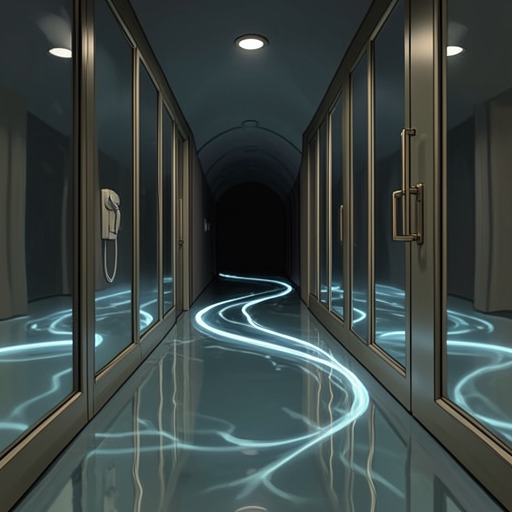
Mirror Passage first appears when an unidentified person leads Y/N through darkness to a mirror and commands her to enter. Y/N remains unable to control her own body; although she wants to speak, she cannot act independently. Her hand reaches toward the surface, and when her finger touches it, the mirror feels like water. She begins to place her hand inside, making the passage tactile rather than merely visual and establishing that the mirror is a permeable boundary.
The crossing is interrupted when a voice calls for Y/N to wake up. She withdraws her hand, and the mirror disappears. After closing and reopening her eyes, she finds herself back in her room. This first encounter therefore presents Mirror Passage as an unstable threshold activated through coercion and suspended consciousness. It can open without Y/N’s consent, vanish abruptly, and leave her uncertain whether the experience was a physical crossing, a supernatural summons, or both.
Passage into the Mirror Realm
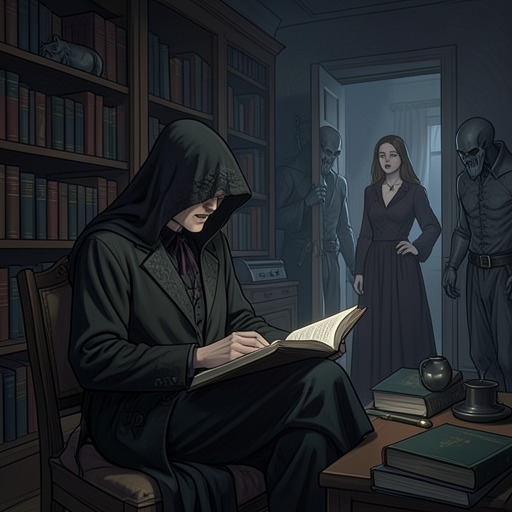
The passage becomes unmistakably physical when Jin’s body falls to the ground while a shadow remains standing and holding Y/N’s wrist. The shadow pulls her inside the mirror, whose surface again feels like water. Y/N is consequently transported into the mirror realm rather than merely shown an image of it. The scene also separates the visible body from the force controlling the crossing: Jin collapses, but the shadow continues the action, making possession and passage part of the same threat.
Inside the other realm, Y/N is immediately exposed to danger. She feels a sharp pain in her leg and discovers an enormous water snake or similar creature at her feet. The passage therefore does not function as safe escape. It removes Y/N from one peril only to place her in an unfamiliar environment where the rules of survival are unclear. Jin remains present there, and when Y/N asks where they are, he identifies the mirror as being over to the side of their surroundings. The mirror is thus both the boundary they crossed and a visible landmark within the realm, preserving a possible connection to the world they left.
Rescue, Search, and Strategic Use
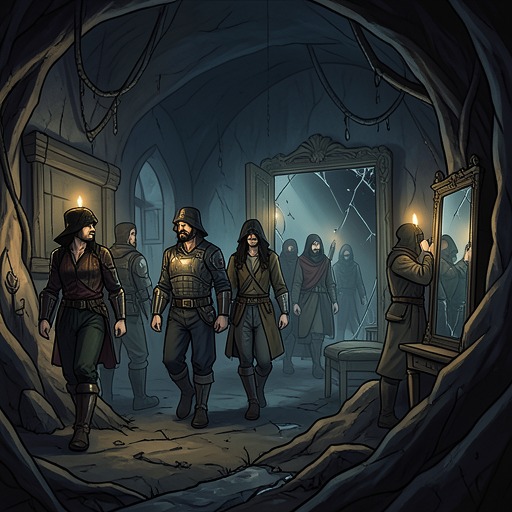
The existence of Mirror Passage changes the practical stakes for the vampires. J-Hope asks whether Suga is still sleeping and whether he intends to go and retrieve Jin, while the others prepare to search. The group’s concern shows that entry into the mirror realm is not an isolated supernatural episode but a crisis requiring coordinated action. Once Jin and Y/N are separated from the castle, the mirror becomes the point around which rescue plans and movement between worlds are organized.
The vampires’ search also reveals the danger of navigating without reliable knowledge. J-Hope directs Jungkook to look in another direction after Jungkook begins walking the same way as V, suggesting that the group must divide its efforts and inspect the surrounding space rather than assume that the passage provides a straightforward route. Mirror Passage creates access, but it does not supply orientation, safety, or control over the destination.
Later, Y/N can use supernatural power to create a route of her own. During the confrontation with Gehan, the ruler of Gehenna, she pushes him away and concentrates on imagining the gates of hell into existence. The resulting rumbling indicates that her power can produce or summon an opening on a scale beyond the ordinary mirror crossing. This contrast clarifies the development of passage in the narrative: the earliest mirror threshold acts upon Y/N, whereas the later opening is generated through Y/N’s deliberate concentration and becomes an expression of recovered agency.
Boundaries, Bodies, and Trust
Mirror Passage repeatedly exposes the vulnerability of the body. Y/N’s wrist is physically held as the shadow draws her across the boundary, her hand is made to enter the mirror during the earlier encounter, and the water-like surface erases the reassuring distinction between solid room and supernatural elsewhere. The passage is therefore not a neutral door. It is an invasive transformation of space that can seize the body before the mind understands what is happening.
This bodily danger echoes other violations in the story. Y/N is subjected to blood-drinking, suffers a sharp wound from the water snake, and later encounters the consequences of supernatural violence and medical examination. Against that background, Mirror Passage becomes another mechanism through which Y/N’s body is managed by forces outside her control. Yet its repeated use also prevents the vampires and their enemies from possessing an absolute monopoly over space. A threshold that abducts can also become a route for pursuit, rescue, escape, or counterattack.
The passage further intensifies the story’s problem of trust. Y/N is led toward the first mirror by an unknown figure, interrupted by an unseen warning, and later dragged through the surface by a shadow associated with Jin’s fallen body. Familiar appearances cannot guarantee safety, just as the mirror cannot be treated as a passive object. The recurring uncertainty surrounding who opens the passage, who controls it, and where it leads makes every crossing a negotiation between apparent rescue and concealed danger.
Narrative Function and Significance
As a narrative device, Mirror Passage links the story’s ordinary domestic spaces with its supernatural geography. Y/N can be abandoned by her mother in the outside world, encounter J-Hope after running away, return to her room after the first interrupted crossing, and later enter a realm where Jin is already present. The mirror gives these otherwise disconnected scenes a common architecture: separation is followed by threshold crossing, and threshold crossing produces a new form of captivity or discovery.
Its liquid surface is especially important because it makes reflection unstable. A mirror normally promises an image of the present world, but here it conceals depth, movement, and another location. The disappearance of the first mirror and the later visibility of a mirror inside the other realm show that the boundary can shift from object to landscape. Mirror Passage consequently represents a world in which no enclosure is fully secure: a room may open into danger, a prison may contain an exit, and the surface that seems to divide worlds may be the very thing that connects them.
By the time Y/N can summon the gates of Gehenna through focused will, passage has become more than an instrument of the Green-eyed forces. It remains associated with abduction and peril, but it also participates in Y/N’s movement from helpless subject to active force. The motif’s final importance is therefore double. Mirror Passage preserves the story’s atmosphere of unstable identities and treacherous boundaries, while its changing control marks Y/N’s gradual capacity to cross, resist, and ultimately reshape the spaces that once controlled her.